20 Highest Calorie Meats for Weight Gain

Selecting high calorie meats can make a significant difference in achieving specific dietary goals, such as gaining weight, building muscle, or simply increasing calorie intake to maintain a more energy-intensive lifestyle.
While meats are renowned for their protein content, their calorie counts can vary significantly, primarily due to differences in fat content.
This article highlights the top meats with the highest calorie content per 100 grams in their raw form, offering a guide for those looking to enrich their meals with calorie-dense options.

Table of Contents
How to Compare Meat for Calorie Density
When comparing meats for their calorie density, it’s essential to consider the calories present in a specific weight of the meat, typically measured per 100 grams. This standard measurement allows for an accurate and fair comparison across different types of meats.
The calorie density in meats is primarily determined by the fat-to-protein ratio, as most meats contain almost no carbohydrates. Meats with a higher calorie content generally contain more fat, which not only contributes to their energy density but also to their flavor richness and texture tenderness.
Understanding this can help you make informed dietary choices that align with your nutritional needs and preferences, particularly if you are aiming for weight gain.
20 High-Calorie Meats
The calories used per 100 grams are generic and can vary from brand to brand and butcher to butcher.
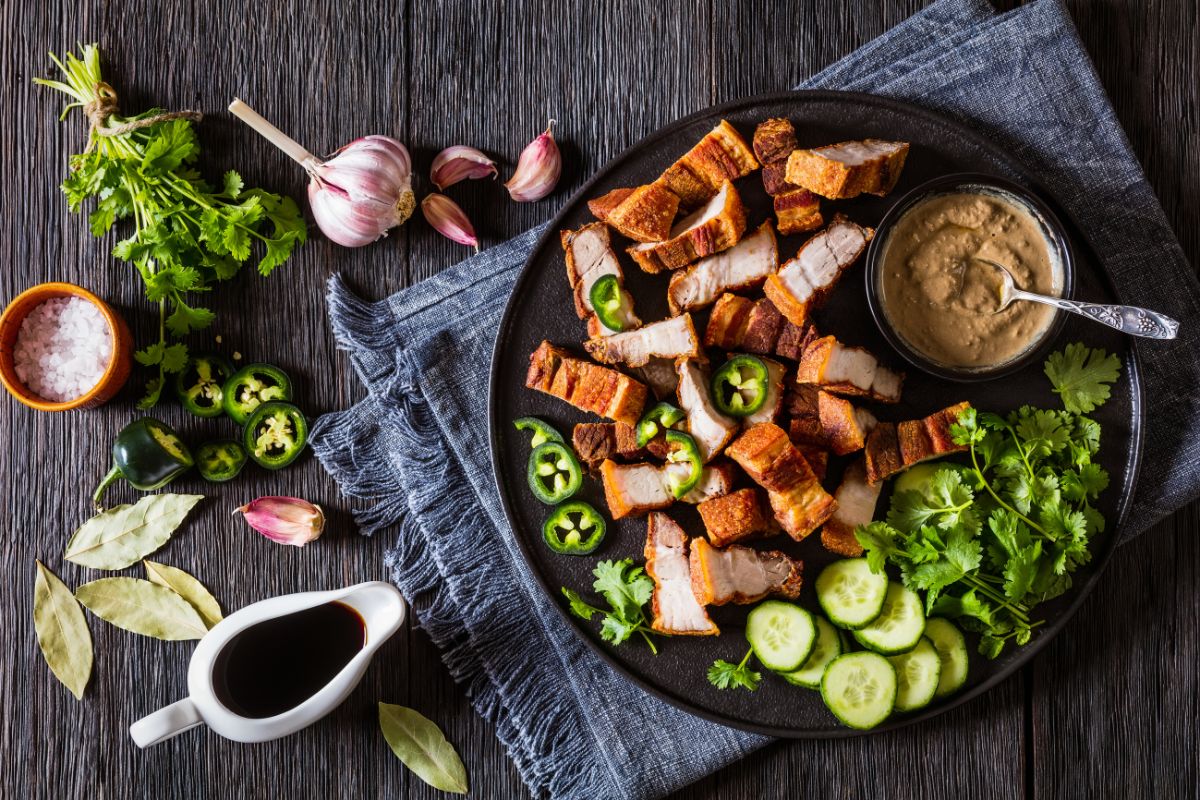
1) Pork Belly
518 Calories per 100 grams
Pork belly is a cut that comes from the belly of a pig and is known for its fatty content and rich, succulent flavor. There are various types of pork belly preparations across different cuisines, from the crispy, crackling skin varieties to those used in making bacon.
It’s widely available in supermarkets and butcher shops, often sold in slabs that can be cooked whole or cut into smaller portions.
Nutrition
Pork belly is high in calories and fat, making it an excellent source of energy. The fat in pork belly is a mix of saturated and monounsaturated fats, including omega-6 fatty acids. It also provides essential vitamins and minerals, such as vitamin B6, vitamin B12, niacin, and selenium.
Serving Suggestions
Pork belly can be roasted, braised, or slow-cooked to achieve a tender texture and a caramelized exterior. It’s a staple in many dishes worldwide, such as in Korean cuisine as samgyeopsal, in Chinese cuisine as part of red-braised pork, and in Italian cuisine where it’s used to make pancetta.
2) Chorizo
455 Calories per 100 grams
Chorizo is a type of pork sausage known for its vibrant red color and spicy, smoky flavor, attributed to smoked paprika. There are primarily two types: Spanish chorizo, which is cured and firm, and Mexican chorizo, which is fresh and needs to be cooked.
Chorizo can be sourced from local butchers, supermarkets, and specialty stores offering international foods.
Nutrition
Rich in calories, chorizo is also packed with protein and fats, including saturated fats. It contains vitamins such as Vitamin B12 and minerals like iron, zinc, and phosphorus, contributing to its nutritional value.
Serving Suggestions
Chorizo can be grilled, fried, or simmered and is commonly used to add depth to stews, soups, and beans. It’s a key ingredient in dishes like Spanish paella, Mexican tacos, and Portuguese feijoada. Chorizo pairs well with potatoes, eggs, and peppers.

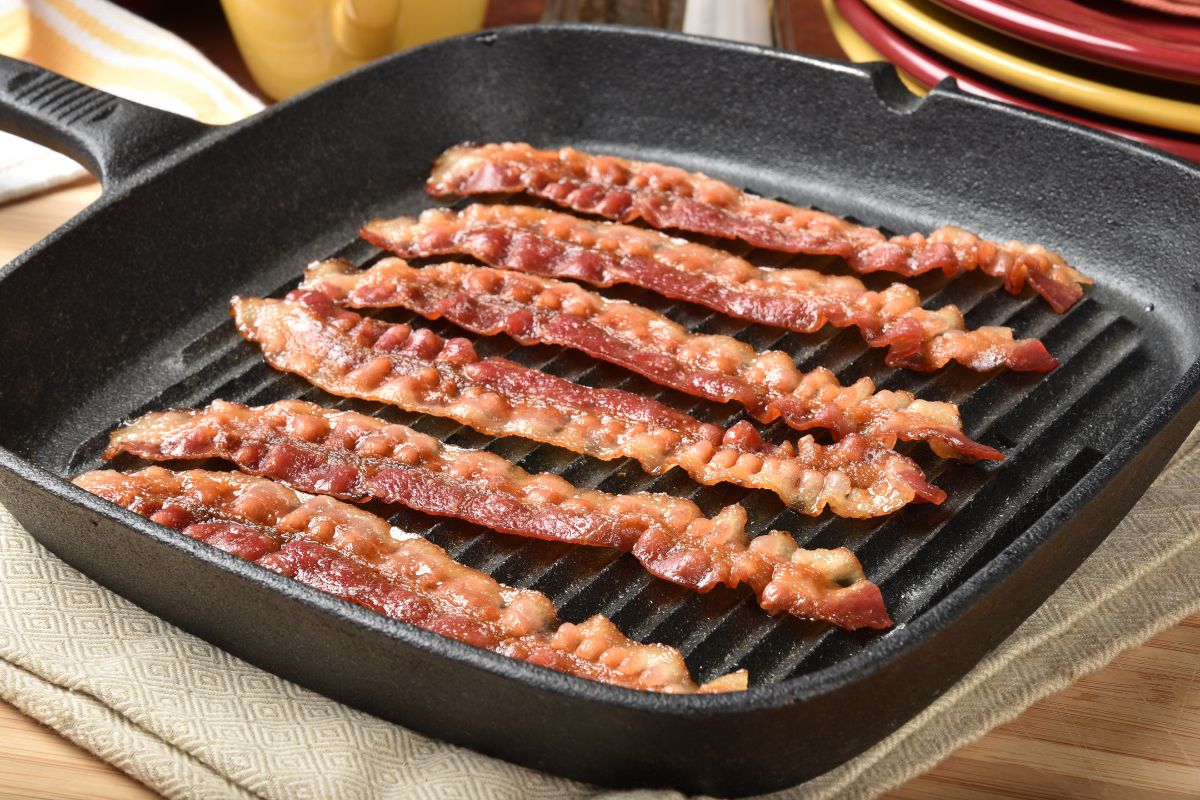
3) Bacon
417 Calories per 100 grams
Bacon is made from pork belly or back cuts, which are cured, smoked, and sliced. It varies by type, from American-style bacon, known for its smoky flavor, to Canadian bacon, which is leaner and comes from the loin.
Bacon is widely available in grocery stores and can also be purchased from local butchers for fresher options.
Nutrition
Bacon is calorie-dense, primarily from fats, and provides a good amount of protein. It contains B vitamins, phosphorus, and selenium but is also high in sodium and saturated fats, which should be consumed in moderation.
Serving Suggestions
Bacon is versatile and can be pan-fried, baked, or grilled, making it a popular choice for breakfast dishes, sandwiches, and salads. It’s a key component in recipes like BLTs and carbonara. Bacon’s salty, smoky flavor complements savory ingredients like eggs and sweet ingredients like maple syrup.
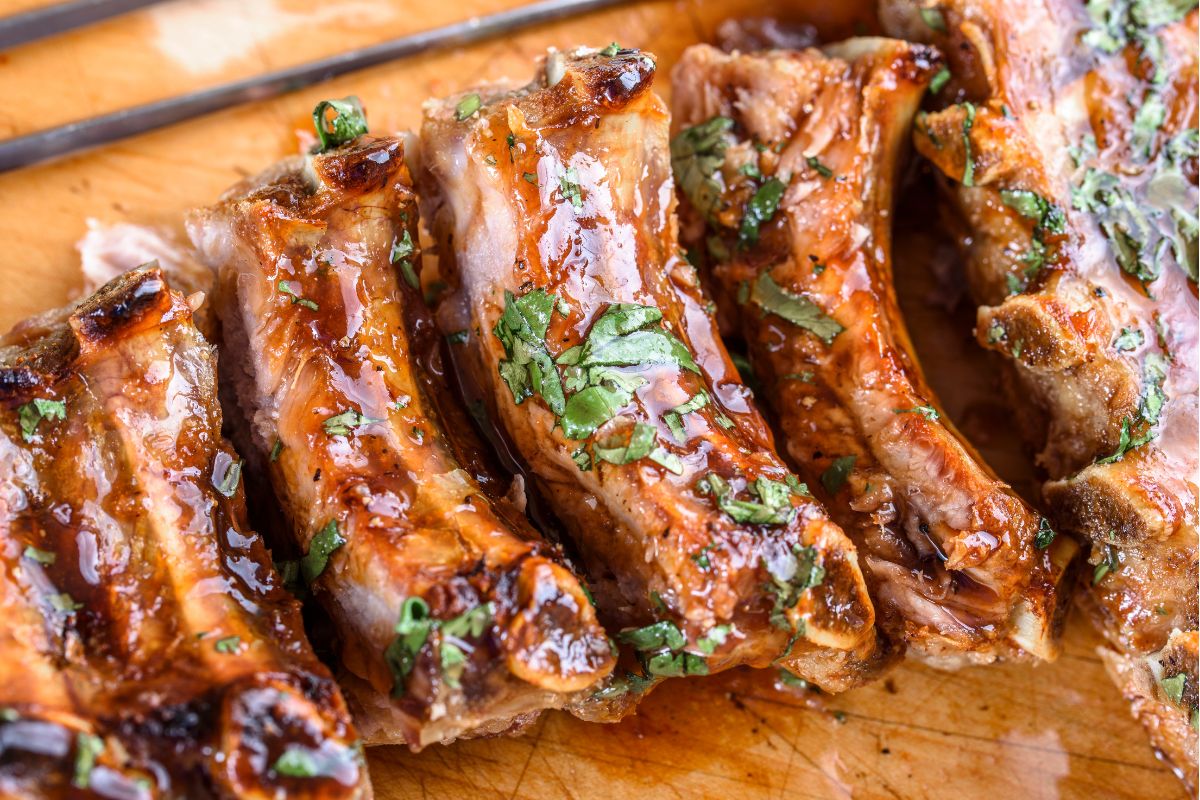
4) Pork Ribs
361 Calories per 100 grams
Pork ribs, encompassing various cuts from the loin to the belly of the pig, are cherished for their meaty texture and flavorful fat. The two primary types are spare ribs and baby back ribs, each offering a different eating experience.
Spare ribs are larger and fattier, while baby back ribs are leaner and more tender. Quality pork ribs can be found at butcher shops and supermarkets, often available both raw and pre-marinated.
Nutrition
Rich in calories mainly due to their fat content, pork ribs also offer a good source of high-quality protein, essential for muscle repair and growth. They are rich in B vitamins, zinc, and selenium, nutrients that play vital roles in overall health maintenance and immune function.
Serving Suggestions
Pork ribs excel when slow-cooked, barbecued, or smoked, techniques that tenderize the meat and infuse it with deep flavors. They’re often marinated or dry-rubbed with a mixture of spices before cooking to enhance their natural taste.
Popular dishes include barbecue pork ribs, glazed with a sticky, sweet sauce, or dry-rubbed ribs, showcasing the meat’s rich flavor profile.
5) Salami
336 Calories per 100 grams
Salami is a type of cured sausage that comes in a variety of flavors and textures, depending on its region of origin and preparation methods. Key varieties include Italian Genoa salami, spicy Spanish chorizo, and Hungarian salami, each distinguished by specific spice blends and curing processes.
Specialty meat stores, delis, and many supermarkets stock a range of salami options for enthusiasts to explore.
Nutrition
Salami is calorie-dense due to its high-fat content and lower water density due to its curing process, but it’s also a good source of protein. It contains a mix of saturated and unsaturated fats and offers nutrients like vitamin B12 and iron.
Serving Suggestions
Salami is versatile and can be enjoyed thinly sliced as part of a charcuterie board, added to sandwiches for a flavorful punch, or incorporated into cooked dishes like pasta, pizza, and savory pastries.

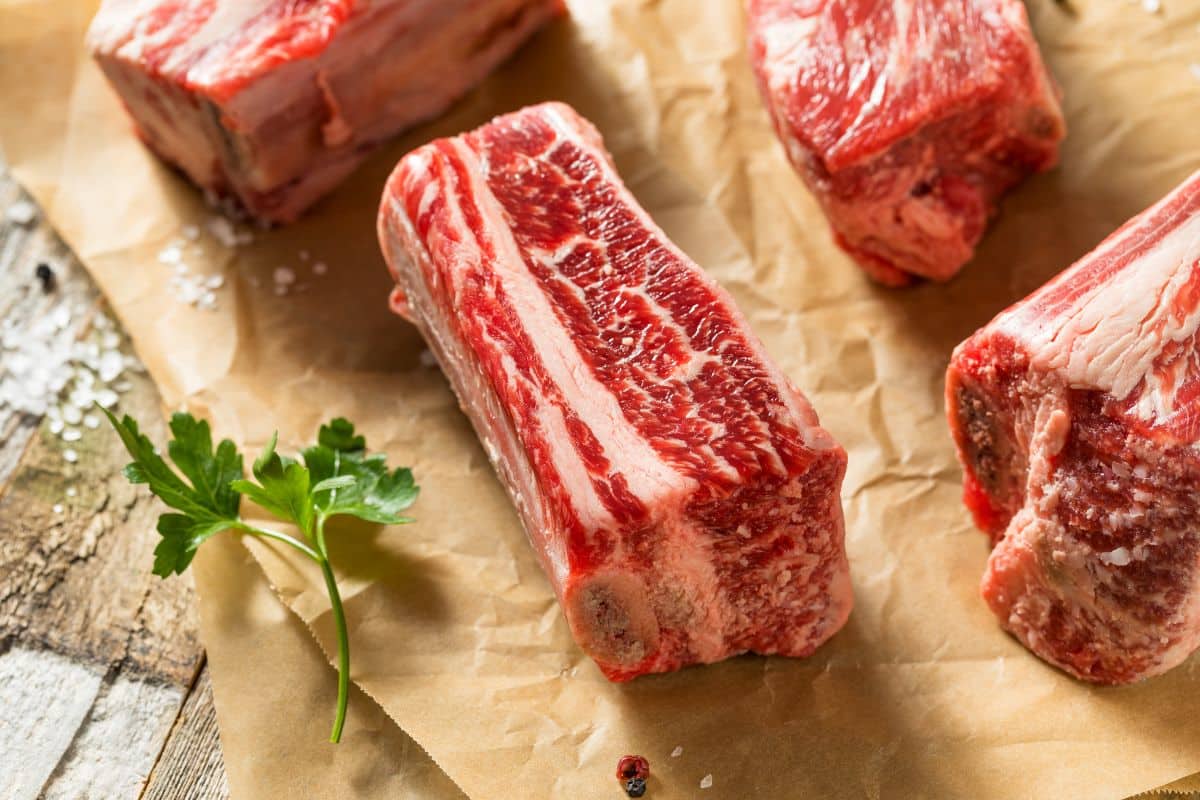
6) Beef Short Ribs
330 Calories per 100 grams
Beef short ribs are known for their rich marbling and deep beefy flavor. They are cut from the brisket, chuck, plate, or rib areas of beef. Each cut offers a unique texture and taste, with options ranging from more tender, leaner ribs to fattier, juicier ones.
High-quality beef short ribs can be sourced from reputable butchers and are also readily available in many grocery stores.
Nutrition
Beef short ribs are high in calories, primarily from their fat content, but they also provide a substantial amount of protein. They contain vital nutrients such as iron for healthy blood and zinc, alongside beneficial fatty acids.
Serving Suggestions
Best cooked slowly to break down the tough connective tissues, beef short ribs are ideal for braising, slow-cooking, or barbecuing. They can be the star of comfort food dishes like beef bourguignon or Korean-style short ribs, marinated and grilled to perfection.
Serving these tender, flavorful ribs with mashed potatoes or steamed rice makes for a hearty, satisfying meal.
7) Pork Sausage
325 Calories per 100 grams
Pork sausage is a versatile meat product available in countless varieties, from sweet Italian to spicy Andouille, each infused with its unique blend of herbs and spices.
The key to finding quality pork sausage lies in seeking out options from reputable butchers and specialty stores, where fresh and artisanal choices are more prevalent.
Nutrition
Pork sausage is a calorie-rich food, primarily due to its fat content, but it also delivers a hearty dose of protein, supporting muscle maintenance and growth. Additionally, it provides essential nutrients such as selenium and various B vitamins.
Serving Suggestions
The culinary uses of pork sausage are vast, making it a favorite ingredient in breakfast dishes, casseroles, and stews. It’s excellent when grilled on its own, used as a pizza topping, or incorporated into pasta sauces for added depth and richness.
8) Beef Sausage
320 Calories per 100 grams
Beef sausage offers a robust alternative to pork varieties, with options ranging from German bratwurst to smoky kielbasa.
Similar to pork sausage, the best beef sausages are often found at specialty butchers or gourmet food stores, where the focus is on quality ingredients and traditional preparation methods.
Nutrition
Rich in calories, beef sausage provides a substantial source of protein and fats, along with important nutrients like iron and zinc, which are vital for blood health and immune function.
Serving Suggestions
Beef sausage is incredibly versatile, adding a savory punch to breakfast dishes, hearty stews, and grilled vegetable platters. It pairs well with bold spices and flavors, making it suitable for recipes like spicy sausage and bean chili or as a filling for savory pastries.
9) Beef Brisket
310 Calories per 100 grams
Beef brisket is a cut from the breast section of the animal, known for its rich fat marbling and deep, beefy flavor. This cut is a staple in slow-cooked barbecue dishes but requires patience and skill to tenderize.
High-quality brisket is typically available from butchers and is increasingly found in supermarkets, especially those with a good selection of meats.
Nutrition
Beef brisket’s high calorie content comes from its mix of fat and protein, making it an energy-dense choice for meals. It’s also a good source of vitamins B12 and B6, phosphorus, and iron.
Serving Suggestions
Brisket shines when slow-cooked, smoked, or braised, as these methods allow its tough fibers to break down into tender, flavorful meat.
It’s the star of traditional barbecue and Jewish braised dishes like brisket with root vegetables. Thinly sliced, it also makes a savory addition to sandwiches, often complemented by pickles and mustard or a rich barbecue sauce.

10) Pork Neck
300 Calories per 100 grams
Pork neck, a cut rich in connective tissue and marbling, offers a depth of flavor that is unparalleled in slow-cooked dishes.
Nutrition
The calorie density of pork neck comes from its balance of fat and protein, providing both energy and essential nutrients for the body’s needs. It’s particularly rich in B vitamins, essential for metabolic processes.
Serving Suggestions
Pork neck is best when prepared in a slow cooker, stew, or braise, where the low and slow cooking method allows the meat to become tender and flavorful.
It’s a staple in many cuisines, from the rich, spicy stews of Southeast Asia to traditional European broths and sauerkraut dishes. Its robust flavor also makes it an excellent candidate for pulled pork recipes, easily shredded and served with a variety of sauces.
11) Lamb Shank
291 Calories per 100 grams
Lamb shank comes from the lower part of the animal’s leg and is known for its tender meat once cooked properly. Due to its rich flavor and the bone-in presentation, lamb shank has become a favorite in fine dining and home cooking alike.
High-quality lamb shanks are typically available at specialty butchers and can sometimes be found in supermarkets with a diverse meat selection.
Nutrition
Lamb shank is not only high in calories but also provides a significant amount of protein and essential fats, contributing to muscle repair and growth. It’s also a source of iron and zinc.
Serving Suggestions
Braising is the most common and arguably the best method for cooking lamb shank, as it allows the meat to become exceptionally tender and infused with flavors from herbs, wine, and stock.
Lamb shanks are often served as the centerpiece of a meal, accompanied by mashed potatoes, polenta, or root vegetables, making for a hearty and warming dish.
12) Ribeye Steak
291 Calories per 100 grams
The ribeye steak, prized for its marbling and tenderness, is cut from the rib section of beef. This steak is a favorite among meat lovers for its rich flavor and juicy texture.
It’s widely available in both butcher shops and supermarkets, with options ranging from grass-fed to grain-finished, catering to a range of dietary preferences and tastes.
Nutrition
Ribeye’s high caloric content is matched by its nutritional value, offering ample protein to support muscle maintenance and an array of fats, including beneficial monounsaturated fats. Additionally, it’s a good source of iron and B vitamins, crucial for energy production and overall health.
Serving Suggestions
My favorite way to cook ribeye steak is by grilling or pan-searing it, which allows its natural flavors to shine. It can then be served with some cooked high calorie vegetables and a carbohydrate for a balanced high calorie meal.

13) Sirloin Steak
271 Calories per 100 grams
Sirloin steak comes from the rear back portion of the cow. This versatile cut offers a balance between tenderness and taste, making it a popular choice for grilling and pan-frying. It’s a popular cut of steak that is in most butchers and supermarkets.
Nutrition
Sirloin steak is still a rich source of high-quality protein, supporting muscle building and repair. It also delivers important nutrients like iron, for healthy blood, and zinc, for immune function, alongside a variety of B vitamins.
Serving Suggestions
Sirloin steak is highly adaptable, suitable for a quick sear on a hot grill or skillet to achieve a flavorful crust with a juicy interior. It pairs well with robust sauces such as peppercorn or chimichurri and can be sliced into strips for salads, stir-fries, or tacos, making it a versatile component of any meal.
14) Ground Beef (80/20)
254 Calories per 100 grams
Ground beef, particularly the 80/20 mix which denotes 80% lean meat to 20% fat, is a staple in kitchens worldwide. Its balance of fat ensures flavorful, juicy results in a variety of dishes.
This mix is widely accessible, found in grocery stores and butcher shops, perfect for those looking for both flavor and a higher calorie content in their cooking.
Nutrition
The 80/20 ground beef blend provides ample protein for muscle maintenance, along with a significant amount of calories from fats, making it an energy-rich food choice. It’s also a good source of iron and B vitamins.
Serving Suggestions
Ideal for making burgers, meatballs, and meatloaf, 80/20 ground beef offers juiciness and flavor that leaner mixes can’t match. It’s also excellent for heartier dishes like chili, Bolognese sauce, or shepherd’s pie, where its fat content adds richness and depth to the meal.
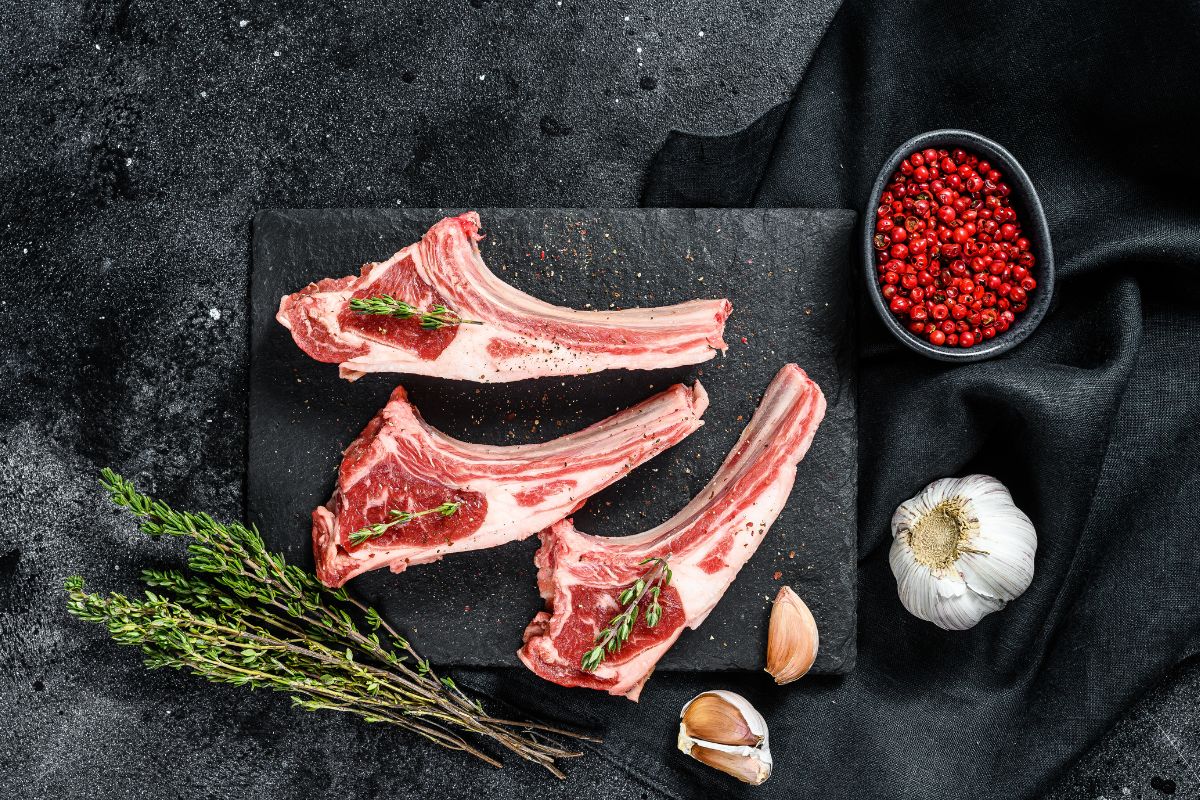
15) Lamb Chop
250 Calories per 100 grams
Lamb chops, cut from the rib, loin, or shoulder, are prized for their tender meat and distinct, rich flavor. These cuts are a favorite for roasting or grilling and can be sourced from quality butchers or supermarkets with a good selection of meats. Each type of chop offers a different experience, from the elegant rib chop to the more substantial shoulder chop.
Nutrition
Lamb chops are not only high in calories but also packed with protein, essential for muscle health. They offer a good amount of healthy fats, iron, which is key for oxygen transport in the body, and zinc, important for immune health.
Serving Suggestions
Grilling or broiling lamb chops brings out their natural flavors, with simple seasonings like rosemary, garlic, and olive oil enhancing their taste. They make for an impressive main course, often served with mint sauce or yogurt-based dips to complement their richness.
16) Beef Shank
232 Calories per 100 grams
Beef shank is extracted from the leg portion of a cow and is characterized by its dense muscle and connective tissue.
Beef shank is a more economical cut, available at most butchers and grocery stores, perfect for budget-conscious consumers seeking nutritious, high-calorie meat options.
Nutrition
While lower in calories than some other cuts on this list, beef shank is a powerhouse of nutrition, offering a substantial amount of protein and essential minerals like iron and zinc. Its rich content in collagen, which breaks down into gelatin during slow cooking, contributes to joint health and skin elasticity.
Serving Suggestions
Beef shank excels in dishes that require prolonged cooking times, such as osso buco, stews, and soups. The process of braising or slow-cooking transforms the shank into tender, flavorful meat, with the marrow from the bone adding richness to the dish.
Serving beef shank with a side of creamy polenta or mashed potatoes can make for a comforting, high calorie meal.
17) Pork Chop
231 Calories per 100 grams
Pork chops, particularly those left with a layer of fat, are a succulent choice for many, offering a rich flavor profile and juicy texture when cooked properly. Sourced from the rib or loin area, these cuts are readily available at most butchers and supermarkets, providing options to suit various tastes and cooking methods.
Nutrition
Pork chops are a substantial source of protein, vital for muscle health and recovery, and their fat content boosts the calorie count, contributing to energy levels. They are also rich in vitamins, particularly B vitamins, essential for metabolic processes and maintaining energy throughout the day.
Serving Suggestions
For the best flavor and texture, pork chops can be grilled, broiled, or pan-fried. Cooking them with the fat on helps to keep the meat moist and adds a depth of flavor that’s hard to achieve with leaner cuts.
Pairing pork chops with applesauce or a mustard glaze can enhance their natural sweetness and savoriness.

18) Chicken Thigh (with skin)
209 Calories per 100 grams
Chicken thighs with the skin on are a deliciously indulgent way to enjoy poultry, known for their juiciness and richer flavor compared to breast meat. It’s widely accessible and offers a more budget-friendly alternative to other meats.
Nutrition
Rich in proteins and essential fatty acids, chicken thighs offer more calories due to their skin and fat content, making them a great energy source. They’re also a good source of selenium and phosphorus, supporting antioxidant defenses and bone health.
Serving Suggestions
Chicken thighs are incredibly versatile, suitable for roasting, grilling, or slow-cooking. Their higher fat content ensures they remain tender and flavorful, even with minimal seasoning.
They’re delicious in dishes like chicken noodle stir fry, chicken cacciatore, teriyaki chicken, or simply seasoned and baked to crispy perfection.
19) Duck Leg (with skin)
201 Calories per 100 grams
Duck legs, particularly with the skin on, are esteemed for their rich flavor and tender meat. While duck may not be as commonly consumed as chicken or beef, it’s a culinary treat found in specialty butchers and some supermarkets, often featured in gourmet and traditional recipes.
Nutrition
Duck legs are a hearty source of protein and contain a notable amount of fat, particularly healthy unsaturated fats when the skin is considered. They’re also rich in iron and B vitamins, contributing to energy metabolism and overall well-being.
Serving Suggestions
Slow-roasting or confit are traditional methods that render the fat and crisp the skin, resulting in succulent, flavorful meat. Duck legs can be served with a variety of accompaniments, from lentils and root vegetables to a tart fruit sauce, balancing the richness of the duck.
20) Lamb Loin Chop
200 Calories per 100 grams
Lamb loin chops, cut from the waist of the lamb, are prized for their tenderness and mild, yet distinct, flavor. They are available at quality butchers and high-end supermarkets and are perfect for special occasions or gourmet home-cooked meals.
Nutrition
Lamb loin chops are not only a good source of high-quality protein but also provide beneficial fats, zinc, and iron, supporting muscle health, immune function, and oxygen transport in the body.
Serving Suggestions
Grilling or pan-searing lamb loin chops brings out their natural flavors, with rosemary, garlic, and olive oil serving as simple yet elegant seasonings.
Conclusion
Incorporating these high-calorie meats into your diet offers a flavorful way to boost your calorie intake, catering to those with goals like muscle building, weight gain, or simply maintaining a more energized lifestyle.
Each meat on this list not only promises to elevate the calorie density of your meals but also brings a unique set of flavors and textures.