The Top 10 Highest Protein Nuts

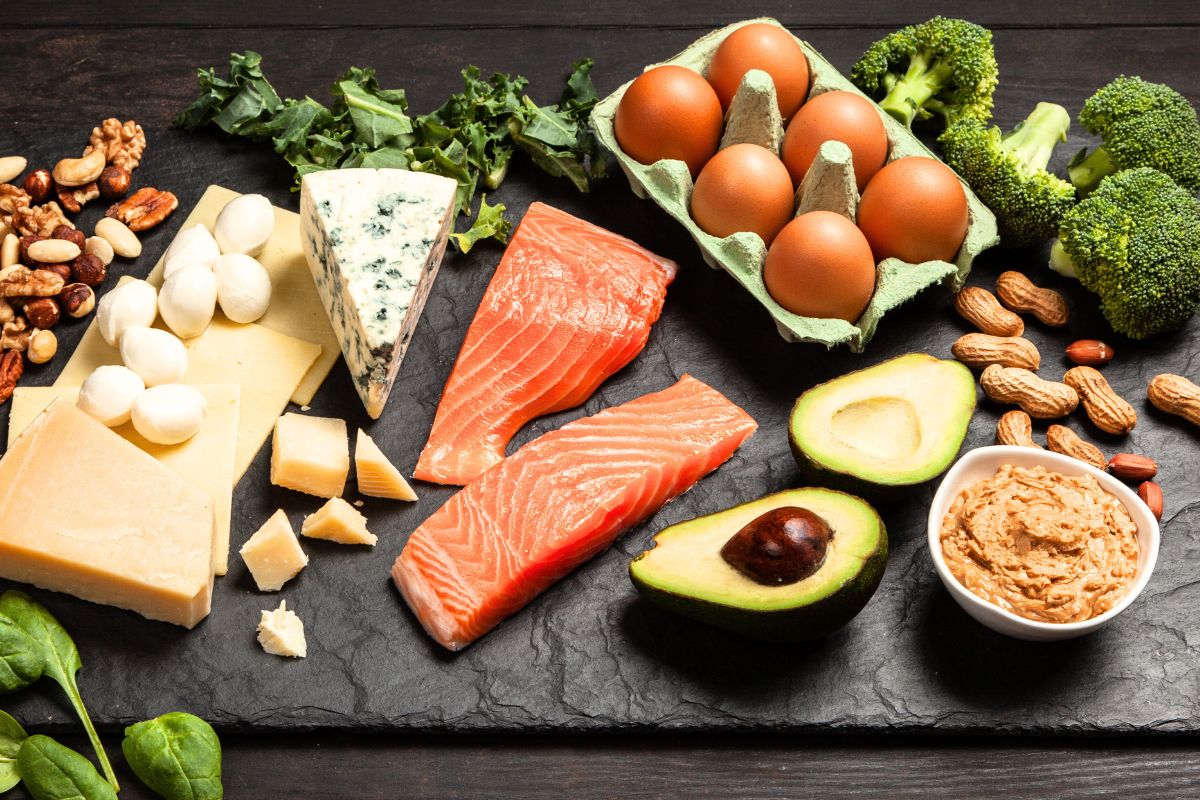
Nuts tend to be excellent additions to high-protein diets. Many are a rich source of protein and high in other important nutrients like healthy fats, fiber, vitamins, and minerals like magnesium and selenium.
However, not all nuts are high in protein. This is why it’s important to choose the right type of high-protein nuts to add to your diet.
Did you know chestnuts are only about 3 grams of protein per 100 grams? That’s 8 times less than peanuts per 100 grams.

Comparing Protein in Nuts: Protein Density
Protein density is a key factor to consider when comparing different types of nuts for their nutritional value. This measure, shown as grams of protein per 100 grams of nuts, provides a standard way to evaluate their protein content side by side.
For instance, if a nut has 25.8 grams of protein per 100 grams, it translates to a protein density of 25.8%. This straightforward comparison method allows for an easy way to assess which nuts might best meet your dietary protein needs.
The Highest Protein Nuts Ranked per 100 Grams
| Ranking | Type of Nut | Protein per 100g |
|---|---|---|
| 1 | Peanuts | 25.8g |
| 2 | Almonds | 21.2g |
| 3 | Pistachios | 20.6g |
| 4 | Cashews | 18.2g |
| 5 | Walnuts | 15.2g |
| 6 | Brazil Nuts | 14.3g |
| 7 | Hazelnuts | 14.1g |
| 8 | Pine Nuts | 13.7g |
| 9 | Pecans | 9.2g |
| 10 | Macadamia Nuts | 7.9g |
The Top 10 Highest-Protein Nuts
Here are the top 10 highest-protein nuts, along with their macronutrients, where they are sourced, and ways to incorporate them into your diet.
1) Peanuts
25.8 grams of Protein per 100 grams.

Peanuts are the highest-protein nut, with a 25.8% protein density. They can be easily found in the grocery store in many forms, including whole, shelled, or as a key ingredient in peanut butter.
Nutrition
They are a rich source of healthy fats, dietary fiber, vitamins, and minerals, including magnesium and vitamin E, making them beneficial for heart health and muscle recovery.
Serving Suggestions
Peanuts add a delicious crunch and nutritional boost to a wide range of dishes. They can be snacked on raw or roasted, sprinkled over salads for extra texture, or blended into sauces and dressings for a rich, nutty flavor.
Peanut butter is a versatile peanut product that can be spread on toast, used in baking, or mixed into smoothies to add protein.
Macronutrients per 100 grams:
- Calories: 567
- Protein: 25.8g
- Carbs: 16.1g
- Fats: 49.2g
2) Almonds
21.2 grams of Protein per 100 grams.

Almonds are slightly higher in carbohydrates then peanuts but still contain a high protein density. They are available in various forms such as raw, roasted, slivered, or as almond butter or almond flour. This makes them incredibly versatile as almond flour can replace flour in many dessert recipes for example these protein pancakes.
Nutrition
Almonds contain a lot of nutrients, providing a substantial amount of healthy monounsaturated fats, dietary fiber, vitamin E, and magnesium.
Serving Suggestions
Almonds are a nutritious snack when eaten raw or roasted. They can also be sliced to add a delightful crunch to oatmeal, yogurt, or salads. Almond flour is a popular gluten-free and high-protein baking alternative, perfect for making protein pancakes and other baked goods.
Almond butter is another versatile product that is excellent for spreading on toast or adding to smoothies.
Macronutrients per 100 grams:
- Calories: 579
- Protein: 21.2g
- Carbs: 21.6g
- Fats: 49.9g
3) Pistachios
20.6 grams of Protein per 100 grams.
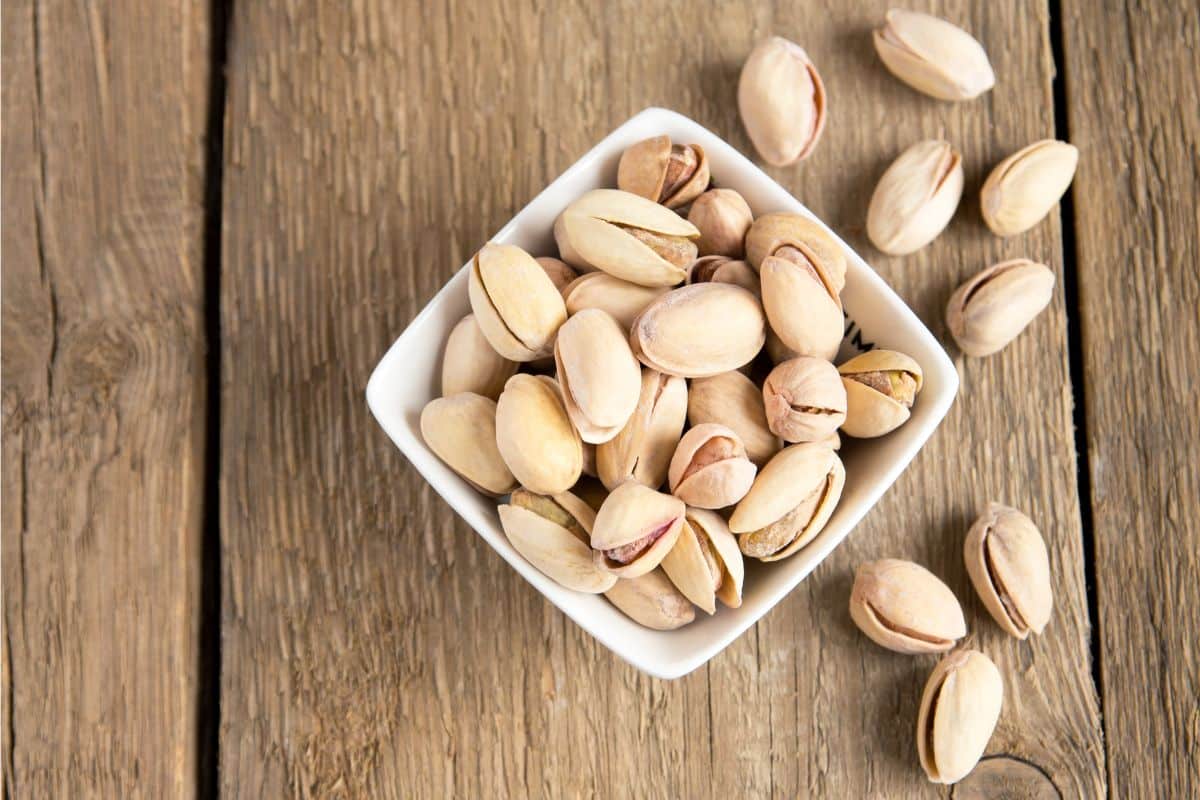
Pistachios stand out with their unique green hue and distinct, slightly sweet flavor. These nuts are not only a great source of protein and offer a rich array of antioxidants and nutrients. Pistachios can be purchased in their shells or shelled for convenience, found in most grocery stores.
Nutrition
They are rich in protein and contain high levels of fiber, potassium, and vitamins B6 and K, plus antioxidants, such as lutein and zeaxanthin.
Serving Suggestions
Pistachios are perfect as a hearty snack on their own, whether shelled or pre-shelled for quick consumption. They add a flavorful and nutritious punch to grain dishes, salads, and baked goods.
Pistachio butter is a creamy, flavorful spread that pairs wonderfully with fruits or can be used as a base for dressing and sauces. Their vibrant color and nutritional profile also make pistachios a great addition to pesto recipes, offering a twist on the classic basil version.
Macronutrients per 100 grams:
- Calories: 562
- Protein: 20.6g
- Carbs: 27.5g
- Fats: 45.4g
4) Cashews
18.2 grams of Protein per 100 grams.

Cashews are known for their creamy texture and slightly sweet flavor, making them a favorite in both savory and sweet dishes. They are found in many forms, including whole nuts, pieces, or as cashew butter, and are readily available in most grocery stores.
Nutrition
Cashews are packed with protein and essential minerals like magnesium, iron, and zinc, contributing to energy production, immune system health, and bone strength. They also offer a good amount of healthy fats and vitamin K.
Serving Suggestions
Their creamy texture makes cashews an ideal choice for blending into smooth, rich sauces. They’re also delightful in stir-fries, lending a subtle sweetness and satisfying crunch. As a snack, roasted cashews can be seasoned with spices for an extra flavor kick.
Macronutrients per 100 grams:
- Calories: 553
- Protein: 18.2g
- Carbs: 30.2g
- Fats: 43.8g
5) Walnuts
15.2 grams of Protein per 100 grams.
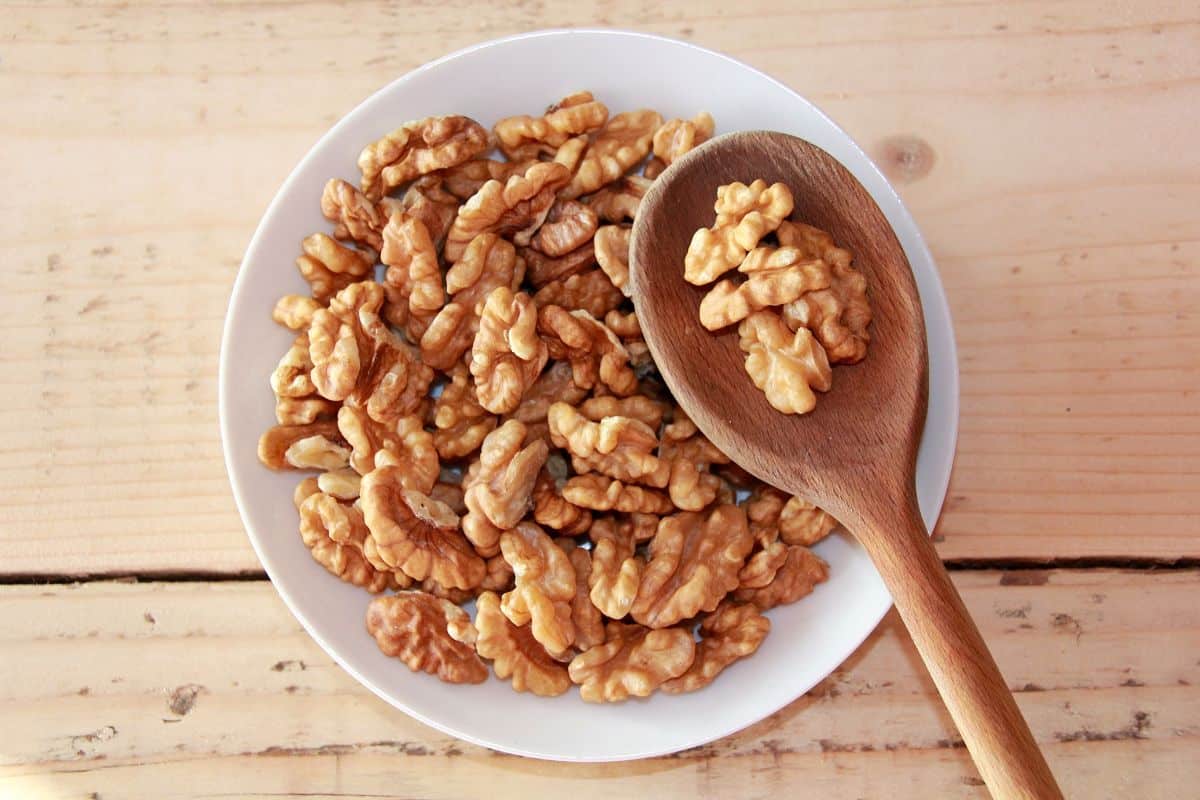
Walnuts are not just a good source of protein; they are also highly valued for their rich content of omega-3 fatty acids, which contribute to brain health. They’re available as whole nuts or halves and very accessible in grocery stores.
Nutrition
In addition to protein, walnuts are an excellent source of antioxidants, vitamin E, and minerals such as magnesium. Their high omega-3 content supports cardiovascular health and cognitive function.
Serving Suggestions
Walnuts add a nutty depth to baked goods, like breads and cookies, and are perfect for tossing into salads or oatmeal for added texture and nutrition. Ground walnuts can be used as a base for vegetarian burgers or mixed into pasta sauces for a boost of flavor and protein.
Macronutrients per 100 grams:
- Calories: 654
- Protein: 15.2g
- Carbs: 13.7g
- Fats: 65.2g
6) Brazil Nuts
14.3 grams of Protein per 100 grams.

Brazil Nuts are a energy packed nut contain high amounts of healthy fats and a remarkably high selenium content. These nuts are slightly less accessible and not as popular in grocery stores; however, can be found in many health food stores and sections.
Nutrition
Brazil nuts provide significant amounts of selenium, a mineral excellent for thyroid function and antioxidant defense. Alongside protein, they offer healthy fats, magnesium, and vitamins E and B-6, supporting heart health and immune function.
Serving Suggestions
Due to their high selenium content, Brazil nuts are best enjoyed in moderation, with just a few nuts meeting the daily requirement for this essential mineral. They make a great addition to trail mixes, can be chopped and sprinkled over salads or yogurt, or simply enjoyed as a nutrient-rich snack on their own.
Macronutrients per 100 grams:
- Calories: 656
- Protein: 14.3g
- Carbs: 12.3g
- Fats: 66.4g
7) Hazelnuts
14.1 grams of Protein per 100 grams.
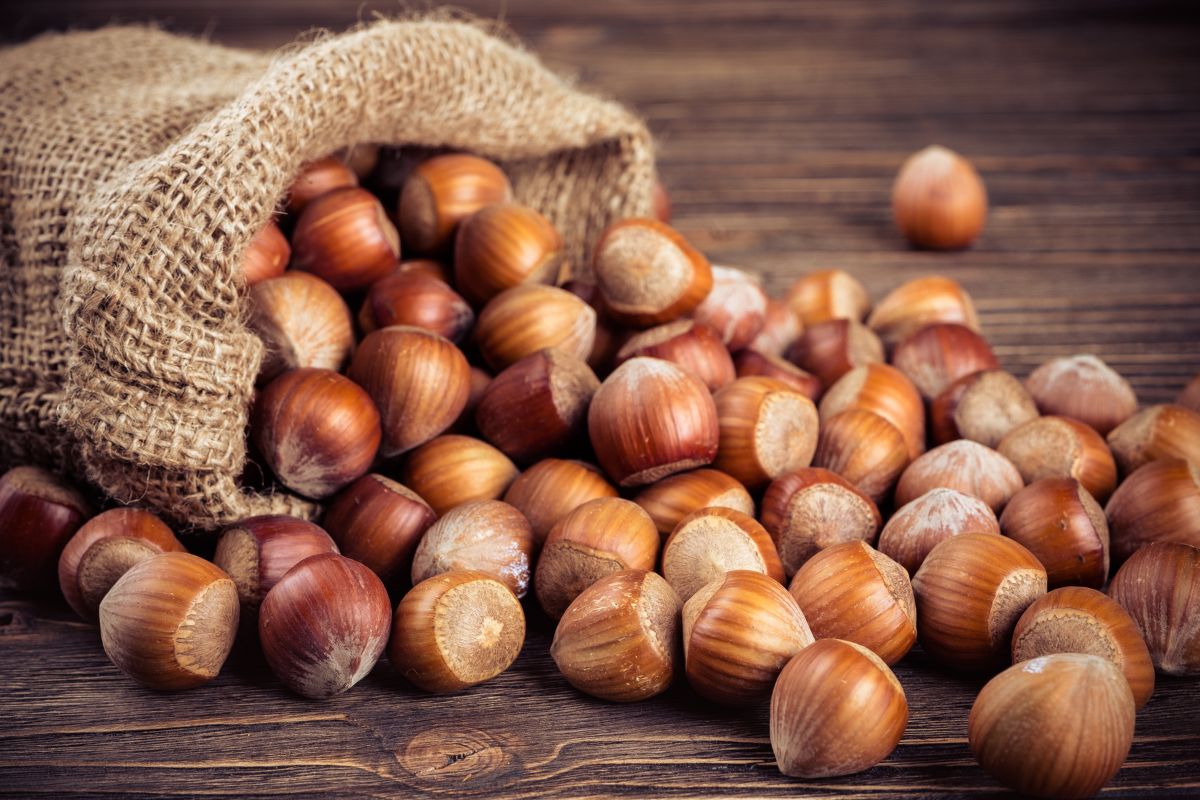
Hazelnuts are a beloved ingredient in spreads and baked goods. These nuts are available whole, sliced, or as hazelnut meal and butter, making them a versatile addition to various recipes. They’re readily accessible in grocery stores and specialty food shops.
Nutrition
Hazelnuts are rich in protein, dietary fiber, and healthy monounsaturated fats. They also contain vitamins E and B, iron, and calcium.
Serving Suggestions
Hazelnuts boast the flavor of many baked goods like cakes, cookies, and pastries. They are also the primary ingredient in spreads such as Nutella, adding a rich, nutty taste.
Toasted and crushed hazelnuts make a delightful topping for salads, yogurt, or oatmeal, offering texture and a boost of protein.
Macronutrients per 100 grams:
- Calories: 628
- Protein: 14.1g
- Carbs: 16.7g
- Fats: 60.8g
8) Pine Nuts
13.7 grams of Protein per 100 grams.
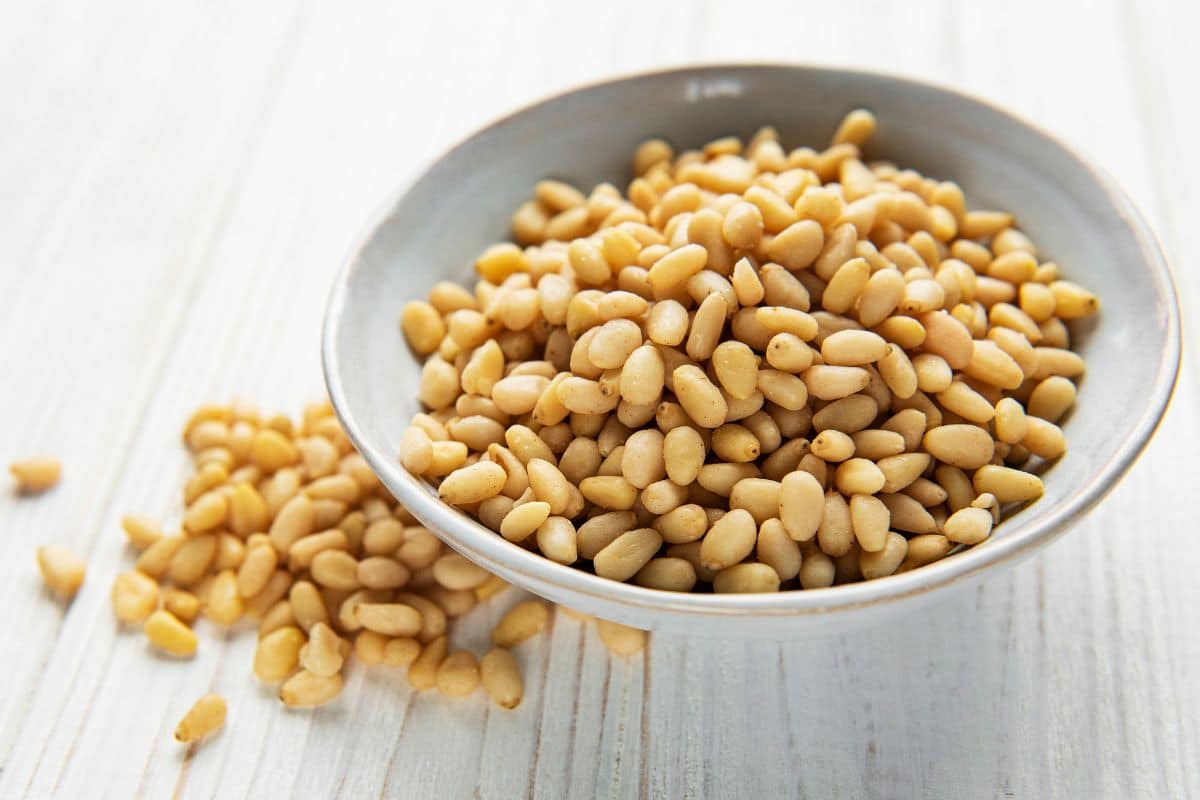
Pine nuts are known for their soft texture and buttery flavor, pine nuts are a staple in pesto and other Mediterranean dishes. They can be found in most grocery stores, both shelled and unshelled.
Nutrition
They are high in protein and contain heart-healthy monounsaturated fats, vitamins E and K, magnesium, and iron.
Serving Suggestions
Pine nuts are great toasted to bring out their flavor, making them a perfect addition to salads, pasta, or baked goods. Their most famous use is in pesto sauce, where they add a creamy texture and rich taste.
Macronutrients per 100 grams:
- Calories: 673
- Protein: 13.7g
- Carbs: 13.1g
- Fats: 68.4g
9) Pecans
9.2 grams of Protein per 100 grams.
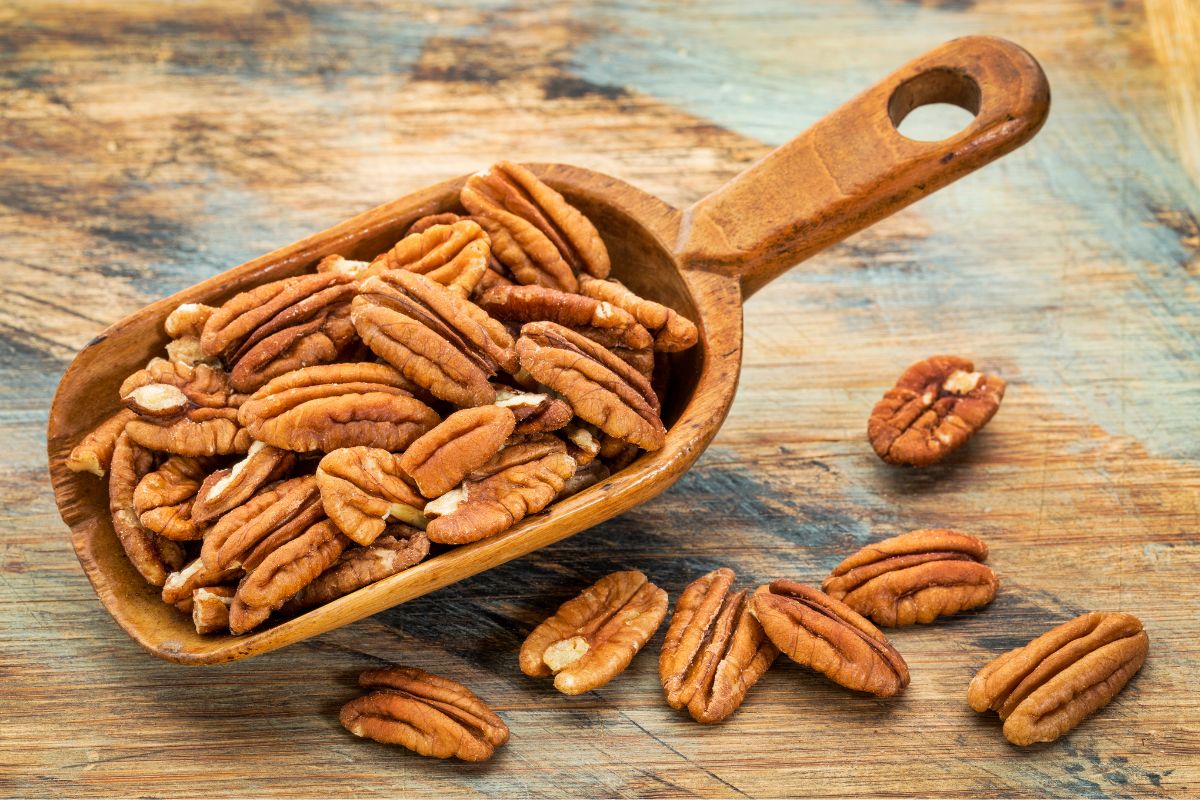
Pecans are cherished for their buttery texture and sweet, rich flavor, making them a favorite in desserts and savory dishes alike. Available raw or roasted, pecans can be purchased whole, halved, or chopped in most grocery stores.
Nutrition
While lower in protein compared to other nuts on this list, pecans are packed with antioxidants, healthy fats, and contain vitamins A and E, zinc, and potassium. They’re beneficial for heart health and can help lower cholesterol levels.
Serving Suggestions
Pecans are a versatile nut, starring in classic dishes like pecan pie and as a crunchy topping for salads and oatmeal. They can also be candied for a sweet treat or added to stuffing and casseroles for a nutty flavor and extra nutrition.
Macronutrients per 100 grams:
- Calories: 691
- Protein: 9.2g
- Carbs: 13.9g
- Fats: 72.0g
10) Macadamia Nuts
7.9 grams of Protein per 100 grams.
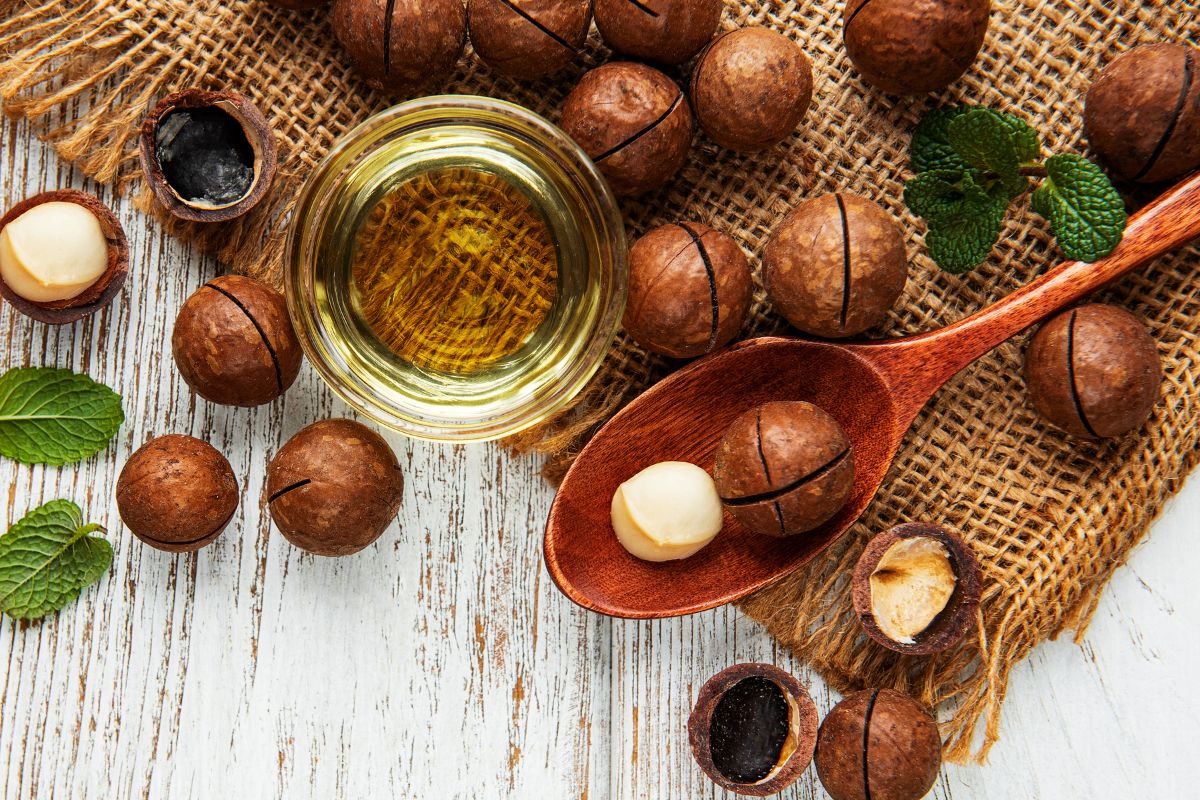
Macadamia nuts are prized for their creamy texture and rich, buttery flavor. They are often found roasted and salted and can be found in baked goods and chocolates. They are available in many larger grocery stores and specialty stores.
Nutrition
Macadamia nuts are on the lower end for protein content because of their higher fat density, containing high levels of monounsaturated fats, contributing to heart health.
They also provide fiber, vitamins, and minerals such as manganese and thiamine, supporting metabolic health and antioxidant protection.
Serving Suggestions
The creamy texture of macadamia nuts makes them an exceptional addition to baked goods, offering a subtle sweetness and depth to cookies, cakes, and pastries. They’re also fantastic when crushed and used as a coating for fish or chicken, providing a delicate crunch and flavor boost.
Macronutrients per 100 grams:
- Calories: 718
- Protein: 7.9g
- Carbs: 13.8g
- Fats: 75.8g
Conclusion
Nuts are a fantastic addition to any high-protein diet as they offer more than just protein. They provide healthy fats, vitamins, and minerals that are crucial for a balanced diet.
Choosing a high-protein nut like peanuts, almonds, and pistachios makes the best choice for anyone looking to increase their protein intake with nuts.